

Imagine yourself successfully ascending to the eighth circle of digital damnation: the Sañjīva Hell of online reservations, where your eternal penance is the torture of retrying again and again.
You discover that your crime this time wasn’t a typo, but the unforgivable sin of not rendering your name in the sacred script of Zenkaku (全角): utterly essential Japanese full-width English encoding (like this), impossible on Western keyboards.
Each ritual failure commands the system to erase your credit card information from existence, forcing you to re-enter those 16 digits for what must surely be your twentieth attempt at enlightenment through data entry. You whisper a plea to the digital gods for approval of the 3DS verification code. Alas, the browser tab becomes unresponsive.
Yet, you persist, because you’ve seen the dark, unmarketed truth: to rely on the English-language booking sites is to be banished to the Realm of Hungry Ghosts, forced to pay for the blandest, corporate, minimalist-aesthetic ryokan that looks like a giant Muji store for more than the going rate and a buffet. No sight of the dizzyingly profuse, multi-course kaiseki that leaves you pining for a Roman vomitorium.
You refuse to surrender, and another attempt is launched. Should this try misfire, there remains the trusty phone screen. The peculiar pilgrimage for the sacred rite of a two-night repose in heaven on earth continues on, where perhaps, just perhaps, a terribly formatted but polite confirmation email might materialize.
Oh, the struggles you endure in pursuit of the ultimate dream ryokan experience…

We are two native Bavarians working remote positions at the same company, which allows us to travel and work from almost anywhere in the world. In 2025, we decided to take our first steps beyond Germany and head to the land of the rising sun. We booked a two-month stay in Tokyo, and after the first month, we felt ready to expand our horizons a little further, fleeing the crowds while traveling as lightly as possible.
At the top of our wishlist was a ryokan stay, complete with all the pampering we could dream of: a room with a private onsen bath and full dinner and breakfast served directly in our room. Since we work remotely, we sometimes have to accommodate meeting times that occasionally fall into ungodly hours (2 AM), so it was essential to be flexible in our own confines. Trying to coordinate our schedule around public bath hours, gender-specific access times, and restaurant closing hours would have made the experience unnecessarily complicated.
With these very specific requirements in mind, we dutifully combed through the main “English” booking sites and quickly discovered, after cross-referencing with actual reality (aka Google Maps), that quite a few of the ryokan that caught our interest on the map were mysteriously absent from the bookable listings, despite being fully visible on a Japanese search, their native websites and Japanese booking aggregators.
Maybe the Western booking monopoly giants just haven’t gotten around to monetizing them yet?
Or, perhaps some ryokan pages still prefer a more traditional approach, which can sometimes be less compatible with the dizzying complexity of a modern browser and each update that breaks it. Local establishments may be focused primarily on catering to a domestic audience who are more familiar with their specific booking procedures and local customs (or actually understand what they’re booking instead of guessing).
Just imagine a small, family-owned ryokan, likely run by an elderly couple, dealing with foreign visitors’ complex dietary restrictions, allergies, visible tattoos, specific demands, all while facing a hard language barrier and no translation app in sight. It’s clear why this challenge would be unappealing and equally risky for their ratings, especially online and from native visitors that would also be exposed to the scene.
Yet some people (us, so “We”) are willing to exchange an authentic, tranquil and immersive travel experience filled with small surprises (especially because of that aforementioned language barrier) for a mandatory death match with a website that looks like it was designed in Windows 95, all while praying that the frantic, Google-Translate-mangled Japanese copypasta somehow manages to appease the digitized Heisei-era gatekeeper enough to allow passage and secure a booking.
If you are like us, or simply ‘curious’ to delve into the delightfully complex antics we’ve run into while booking Japanese ryokan, then let us list some of the glorious triumphs and soul-crushing disappointments we’ve encountered so far:
Availability
The establishments we are searching for are diamonds in the rough, unlisted, unassuming, and waiting to be discovered!
The Ryokan booking game operates on its own peculiar clock, with most establishments capping advance reservation dates well beyond what you might expect. Prepare to stalk your chosen inn’s own website come changing seasons. There, before you see them on the booking giants, proprietors typically debut fresh vacancies alongside revamped menus and whatever clever package names they’ve contrived for the season.
That’s the perfect opportunity to capture coveted rooms during that window when they exist only on the innkeeper’s own system, invisible to the booking platforms that will eventually advertise them to the masses, and most likely without the amusing plan names!
Price
Self-evident is the silver lining of a mercurial exchange rate; the yen has been steadily declining (at least for us Germans). So purchasing your booking at the yen price for natives vs. the random foreigner surcharge is always nice.
Aside from that randomly differing price, there’s also the fact that the lodging is typically on the hook for a listing fee to secure a spot with the usual booking giants such as Booking.com,Hotels.com, etc. This cost often slithers into the final cost of your stay. Booking directly removes that premium.
Supporting the Property
Bypassing third-party portals prunes the aforementioned parasitic commissions, ensuring more of your yen lands directly in the ryokan pocket. Many remote places have already folded, their hot springs corroding and their tatami mats gathering dust forever. These places and the unique experiences they offer are increasingly fragile: soaking in waters said to cure any ailment, or enjoying meals made from vegetables foraged by the inn’s longtime gardener in its own garden. All of these special traditions now hang by a thread.
Depending on where your stay lands you, you may even find your stay of choice right among the remnants of former establishments.
A direct booking is a small act of preservation, a quiet “thank you” that helps keep their doors from closing for good.
Additional Options
While most booking sites limit you to basic choices (room only, or with breakfast/dinner), the ryokan native website presents options that read like a fever dream: “The Seasonal Mountain River Crab Dance Joy Experience Plan,” complete with optional private bath reservations, regional sake pairings, or an appropriately kitschy cake.
The choice is between mere lodging and participating in an orchestrated cultural vignette. Once you navigate the flurry of options, you will see tons of things missed with a simple booking.
Just remember: they need your order before arrival to plan their schedule, so don’t count on last-minute changes or additions should you realize you missed booking the dinner of a lifetime.
More Accurate Information
Official sites are troves of the kind of information you actually need: gendered bath schedules, seasonal alerts, and unexpected renovation closures.
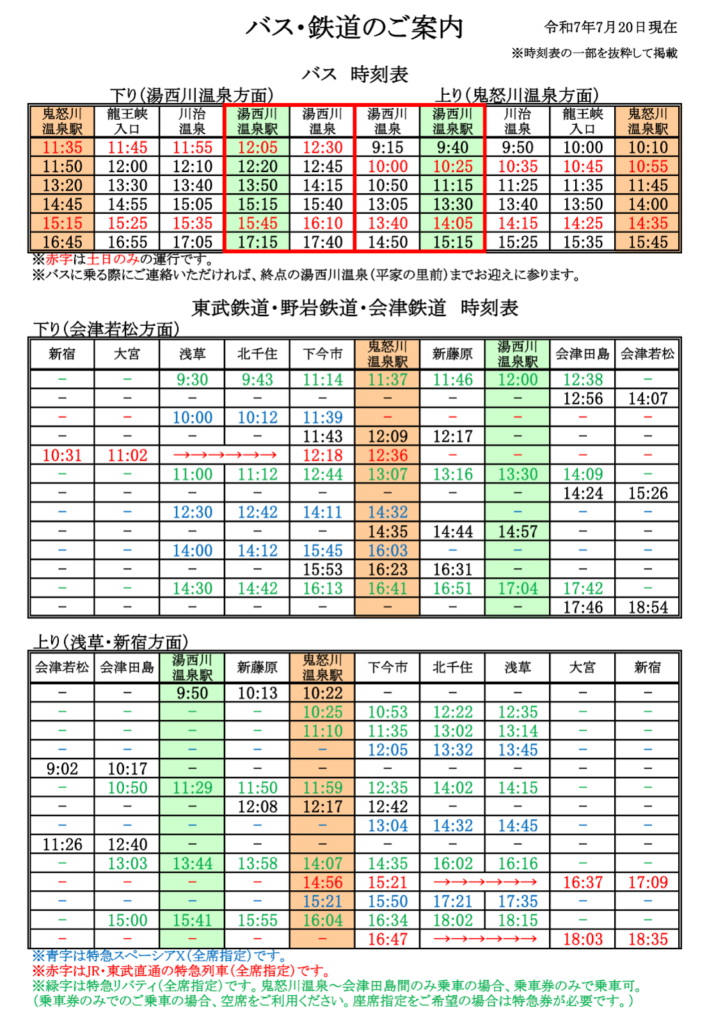
The truly priceless intel, however, is the transportation information, a holy grail standing between your arrival and a complete logistical nightmare. Transportation schedules are often buried deep, and deciphering them can feel like the final boss battle of your trip. More often than not, complimentary shuttle services may also be hidden exclusively on the Japanese-language version.
”Red indicates the bus only operates on Saturdays and Sundays.” – There’s a lot of red on here though?!
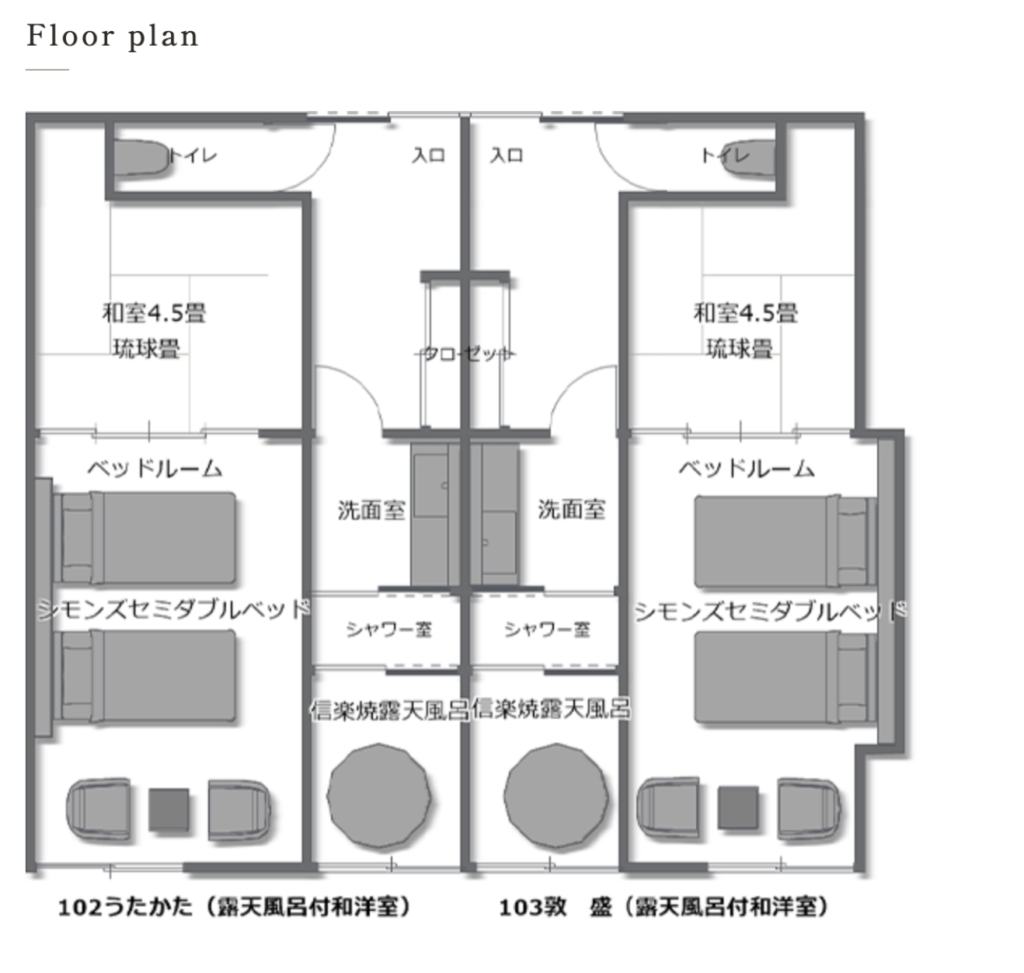
Native pages also break down room particulars, from floor plans to the fixtures within. The English version’s reservations serve as a masterclass in omission, cleverly sidestepping the revelation that your room’s fate will be decided by the whims of chance.
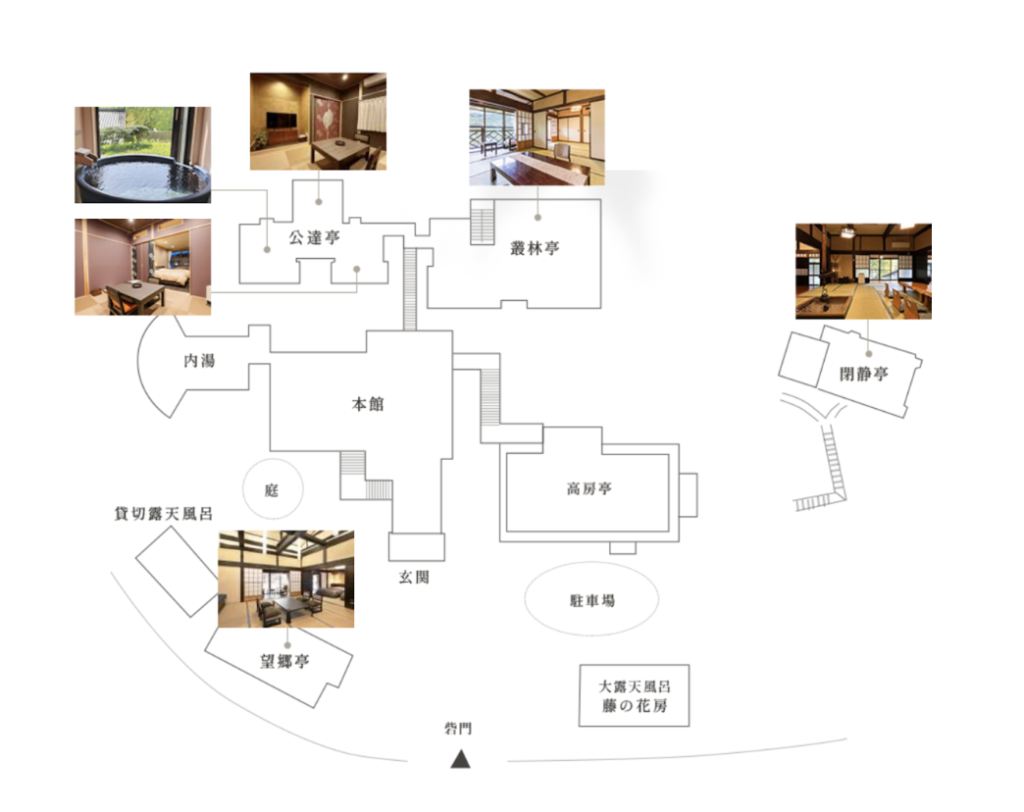
If you’re seeing distinct interiors between a rooms slides but no different options, the native site likely offers granular, room-by-room selection during the reservation process (search by room is also a lifesaver if you are fond of a particular option).
Look at all these details!
You can even see where each room is based on the legend!
Serenity
There’s definitely a gatekeeping tax—one paid with effort rather than yen—pruning the casual hordes, leaving a quieter, less trodden landscape. Here, authenticity isn’t a curated item on a menu; it is the main course. Go ahead, extract yourself from the human mosh pits of overtourism in the city centers and escape into the countryside. You might be the sole Western tourist around for quite a distance.
The Not So Fantastic
Old Websites
Some of these sites have not been updated in a decade, yet somehow allow reservations without a hitch (other than the translation hurdles). Others force you to jump between browsers until pages load, or stupefy you by demanding repeated input of your contact info because they cannot handle autofill. If your patience wears thinner than a paper screen, then retreat to the familiar.
Unreliable Translation
You will quickly discover the limitations of modern machine translations. Every page visit can hallucinate a different type of wordage, if it even translates it in the first place.
If the text doesn’t translate via plugin, pray that you can select it to copy and paste it into the translation tool of your choice.
Is text implemented into images? Prepare to take screencaps, or it might be time to get out your phone for a live/photo translation app.
Translations can also be overly creative with meals, conjuring up dishes that never existed in the first place. Expect difficulties and guesswork until we’ve achieved AGI.
Country Restrictions
Occasionally, the virtual gatekeepers of Japanese commerce demand proof of local residency via a Japanese address, a domestic phone number, or by rejecting foreign card issuers. If you run into that issue, you could try the next best option: reservation via email.
Website Reservation Failure / Not Available?
With persistent, polite emails, even those powered by machine translation, some lodging providers may be willing to assist with bookings, or they may even require it.
This shift from website to email, however, comes with its own special torment: trading the rejection of automated systems for the agonizing uncertainty of waiting for a human response.
Cash Payments Only
For some remote locations, cash still reigns supreme, despite the nation’s technological prowess. For those cases, factor in an ATM pilgrimage into your travel itinerary. In the countryside, that reliable 7-Eleven or FamilyMart cash machine might be a mythical SSR gacha pull, and even if found, it’s not guaranteed to dispense yen to your particular plastic. We’ve witnessed perfectly functional cards suddenly not work in remote locales, while companion cards sail through without a hitch.
Loyalty Points & Cashback Losses
For the point-fiends, who chase Expedia, Booking.com, or Hotels.com rewards with something akin to religious devotion, or who hunt down digital rebates through the likes of Honey or Swagbucks: you will miss out on every single one of them.
Fortunately, booking portals linked specifically with ryokans, like Jalan and Ikyu, step up to provide their own domestic rewards systems.
Language Barrier
The final, and perhaps most formidable, hurdle in this expedition is the linguistic equivalent of scaling Mount Fuji. Navigating without a grasp of Japanese is a genuine, intimidating challenge; it leaves you open to some surprises, and you should be open to them.
The Ultimate Reward
Yet, despite it all, serenity crystallizes the moment you take that first step into the steaming, mineral-rich waters of an onsen you booked against all odds. A little digital damnation was simply the price of admission to paradise.